Diana Hidalgo
English 110
Prof. Pawlowski
Nov. 14, 2018
Ways Pink Tax makes Women’s Life Difficult (and How Companies Are Justifying It)
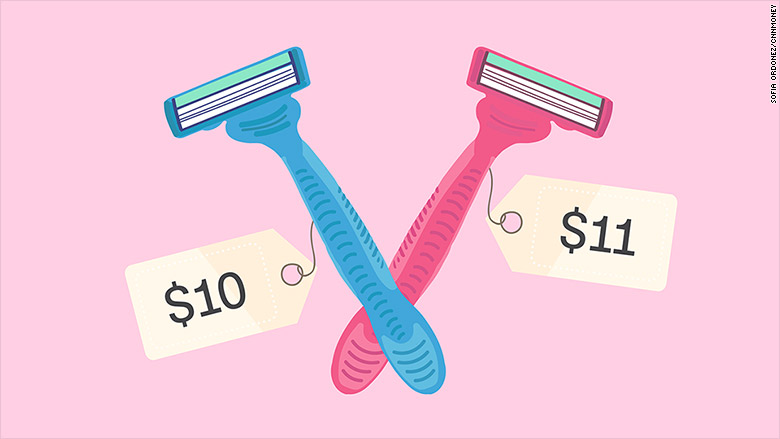
Until recently, that is. According to a study conducted by congresswoman, Carolyn B. Maloney, there’s is a correlation between companies and pink tax increase.It is no secret that pink tax exists and is seen in different parts of today’s society. Pink Tax is the added charge on top of the regular tax applied to feminine products. The new generation of females is being challenged through the constant tribulation of having to go the extra mile to avoid extra charges. However, some patterns in pink tax remain the same in the market regardless of the industry. For example, some might say that companies dictate the amount of pink tax applied.
However, there are different ways that could explain the shift in the pink tax. For instance, according to the case conducted by Carolyn Maloney, the pink tax and its implications when the pink tax is applied to all feminine products.
“Across industry categories, women’s products were consistently priced higher, according to the NYCDCA report. Overall, women’s products have priced an average of 7 percent higher than substantially similar to men’s products. The difference in average prices was smallest for children’s clothing (4 percent), and largest for personal care products such as deodorants, body wash, and razors (13 percent) … Products in the “senior/home health care” category were priced 8 percent higher” (Maloney, Carolyn B.).
Females are being forced to either pick male products or pay for the price difference. As a woman, this is frustrating because we are subject to not having any other choice than to pay the pink tax because of necessity. As time passes, women continue to advocate for their rights. Even after they have gained their enfranchisement, the gap still exists to this day. This 8 percent tax applies to “items such as supports and braces, canes and adult diapers. The additional cost to senior women is particularly troubling due to the fact that the typical woman aged 65 or older has significantly less income than the typical man of the same age.” (Maloney, Carolyn B.) On average, females start to become more poverty stricken at 65 and above. This is mainly because a woman at this age has more health issues, compared to a woman in her twenties/20’s.
So, how does this all impact a woman’s life? Being a woman has never been easy but there are unique challenges that females are facing today that is impacting females life negatively – from laws makers to companies actions.
Law Maker Conflict With New Laws Trying To Be Passed To End Pink Tax
While it may have been a shock to wide pay difference between women, the gap has always existed from the moment women have worked. According to Caitlin Cruz, she stated that the pay gap explains bigger issues in present-day life for females.
In this statement, she says “The average American woman makes 80 cents for every man’s dollar. It’s worse if you’re a woman of color: Native women make 57 cents while Latina women make 54 cents, and black women make 63 cents.” Cruz explains. “This report makes clear that we need to further research these inequities, but what sticks out to me most is how the gender pay gap seeps over to thinks like mortgages and loans — compounding this issue and putting women at an even greater financial disadvantage,” Maloney tells Bustle. “Women 75 years and older are almost twice as likely to live in poverty as men. It’s hard to believe that’s a coincidence once you see data like this.” (Cruz Caitlyn). Which conflicts with Sen. Ben Hueso who knows the struggle women are facing but still decides to withdraw “his bill banning businesses from charging customers different prices for similar goods on the basis of gender, allowing stores to continue to charge more for products marketed for women and girls.” (Ulloa Jasmine).
Jazmine Ulloa, a Los Angelos time journalist stated lawmakers by including that, “Price determinations are fluid and affected by numerous factors,” the organizations said… to Assembly Judiciary Committee Chairman Mark Stone (D-Scotts Valley). “By forcing retailers to artificially price products inconsistent with their true market value, SB 899 will lead to price fixing, which could negatively impact the market by interfering with supply and demand.” (Ulloa Jasmine).
“A lot of times they don’t want to pass it because it’s a budget issue … they’re in debt,” Boxed’s Mehta says. But, she says, “ultimately by saving women money on these items hopefully they will spend it on other items and have more disposable income.” In Nevada, a version passed last year is awaiting approval by the state’s voters in a referendum scheduled for this November.” (Sagner, Ema). This is why it is significant for congressmen to push for change because the amount of salary a woman makes, allows males today to make more money than females and pay less for services. This results in men having more money saved than women. As a result, female poverty correlates to pink tax because females are not able to females are not able to stop paying for the products they need on a monthly basis.
WOMEN ARE GIVEN LESS PRIORITY
Not so long ago, men and women had consumer rights that protected them from fraud as a consumer. In the state of New York, there are consumer rights laws documents available for the public to read. There is a specific document for women regarding how they could protect their consumer rights. This discourages females for change because the state knows this is discrimination and aid the problem by making a pamphlet to let women know how to “avoid” the pink tax. It also shows how easily women are targeted in order to make a profit.
“It is illegal to charge different prices for men and women for the same service. Price lists may not be based on gender. They must show cost differences like required labor. For example, instead of using the terms “shirts” and “blouses,” price lists must describe the differences that require additional labor to clean: shirts with ruffles; shirts with pleats” (“From Cradle to Cane: The Cost of Being a Female Consumer”). It further mentions that in order “To save money, consider buying the “men’s” version of a product. A Department of Consumer Affairs (DCA) study compared nearly 800 products with clear “men’s” and “women’s” versions from more than 90 brands across five industries.
MORE TAX MEANS MORE MONEY
In this capitalistic era, it is more difficult for products to be placed at their rightful price due to various factors. Today’s companies take advantage of this and therefore price products unfairly. Candice E. and Forbes included statements from two companies that have been practicing pink tax. Through which they use this explanation as a way to justify why they charge women unfairly.
“A Target representative when asked about its pricing differentials by a Washington Post reporter pointed to a company statement: “Our competitive shop process ensures that we are competitively priced in local markets. A difference in price can be related to production costs or other factors.” Forbes continues to mention that “If Target could show that its costs were 87% higher for selling the girl’s helmet, that difference in cost would justify the differential in price. But meeting competitors’ prices in local markets is not a business justification under the civil rights laws… even if it really helps a seller raise its profits.”( “Which Retailers Charge the Largest ‘Pink Tax’?”). Another company is Gap who “released a statement that the additional cost was because “they are created by a team of designers who are experts in creating the most flattering and on-trend plus styles, which includes curve-enhancing and curve-flattering elements such as four-way stretch materials and contoured waistbands, which most men’s garments do not include.” (Elliott, Candice).
WOMEN ARE HAVING A HARDER TIME PROVIDING FOR FAMILIES
You would think that because women have the ability to work, it would be easier for them to provide for their families. But there are complications, like the fact that nowadays, women are single parents and have the responsibility to provide for their child(ren).
“In 2015, a woman with median earnings working full time, year-round earned only 80 percent of what her male counterpart earned” she says. “This 20-percent difference is widely known as the “gender pay gap.” … the pay gap adds up to nearly $10,500 over the course of a year and roughly $500,000 over a lifetime. This contributes to higher poverty rates among women. Research has shown that if women were paid the same as comparable men, the poverty rate among working women would be cut in half.” (Maloney, Carolyn B.)
Meaning that a single parent household is dependent on one single source of income, which really makes it hard for a mother to decide whether she wants to give a meal to her family or buy feminine hygiene for the month. Companies justification in higher priced products does not help women in this position, because one paycheck is not able to cover all the financial responsibilities that result from having a family. If they were able to receive the same amount as men then there wouldn’t be such a financial burden in purchasing products. This would help increase the purchasing power for other necessary necessities kids need, but some companies don’t see that.
COMPANIES ARE ENTERING THE INDUSTRY WITH MORE BAGGAGE
Today, the majority of companies are now spending their time going against the pink tax. This has some benefits and drawback which can be seen from a company called, Boxed, who decided to take initiative.
“Since Boxed will still need to collect sales tax on feminine hygiene products, the company is lowering the prices of tampons and pads by about 9 percent to offset the impact of taxes for consumers” (“This Retailer Is Striking a Blow against the ‘Pink Tax.’”).
Fighting for a cause that has no active supporters in the industry is hard because it is difficult to see change occur. However, this is motivating for women to see that they are not alone in this fight. This also influences other companies to take action and also rebel against price discrimination between men and male. As well as to help the consumer who constantly purchases and keep the business alive. This tremendously benefits businesses because it helps businesses gain more consumer and have consumer loyalty.
“It’s also reducing prices of razors and personal care products that are targeted to women but cost more than male-targeted products on a per-unit or per-ounce basis. For instance, Venus Sensitive Skin Shave Disposable Razors will decline in price by 45 percent, dropping from $31.99 to $17.46.” (“This Retailer Is Striking a Blow against the ‘Pink Tax.’”).
Work Cited
Ayres, Ian. “Which Retailers Charge the Largest ‘Pink Tax’?” Forbes, Forbes Magazine, 7 Jan. 2016, www.forbes.com/sites/whynot/2016/01/07/which-retailers-charge-the-largest-pink-tax/#6ece7977381b.
Ulloa, Jazmine “Bill to End Gender Disparity in Retail Pricing Is Withdrawn after Pushback from Industry Lobbyists.” Los Angeles Times, Los Angeles Times, 29 June 2016, www.latimes.com/politics/la-pol-sac-california-toys-gender-discrimination-20160628-snap-story.html.
Cruz, Caitlin. “These Lawmakers Want You To Know The Pink Tax Affects More Than Just Razors & Deodorant.” Bustle, Bustle, 13 Nov. 2018, www.bustle.com/p/the-pink-tax-affects-way-more-than-just-razors-deodorant-a-new-report-finds-10222753.
Elliott, Candice. “The Pink Tax- The Cost of Being a Female Consumer.” Listen Money Matters, 5 July 2018, www.listenmoneymatters.com/the-pink-tax/.
Maloney, Carolyn B.. “The Pink Tax” How Gender-Based Pricing Hurts Women’s Buying Power (2016): 2-6. Print.
New York City Department of Consumer Affairs, “From Cradle to Cane: The Cost of Being a Female Consumer” (December 2015).
https://www1.nyc.gov/assets/dca/downloads/pdf/partners/Study-of-Gender-Pricing-in-NYC.pdf
Picchi, Aimee. “This Retailer Is Striking a Blow against the ‘Pink Tax.’” CBS News, CBS Interactive, 6 Oct. 2016, www.cbsnews.com/news/this-retailer-is-striking-a-blow-against-the-pink-tax/.
Sagner, Ema. “More States Move To End ‘Tampon Tax’ That’s Seen As Discriminating Against Women.” NPR, NPR, 25 Mar. 2018, www.npr.org/2018/03/25/564580736/more-states-move-to-end-tampon-tax-that-s-seen-as-discriminating-against-women.

This entry is licensed under a Creative Commons Attribution-NonCommercial-ShareAlike 4.0 International license.

